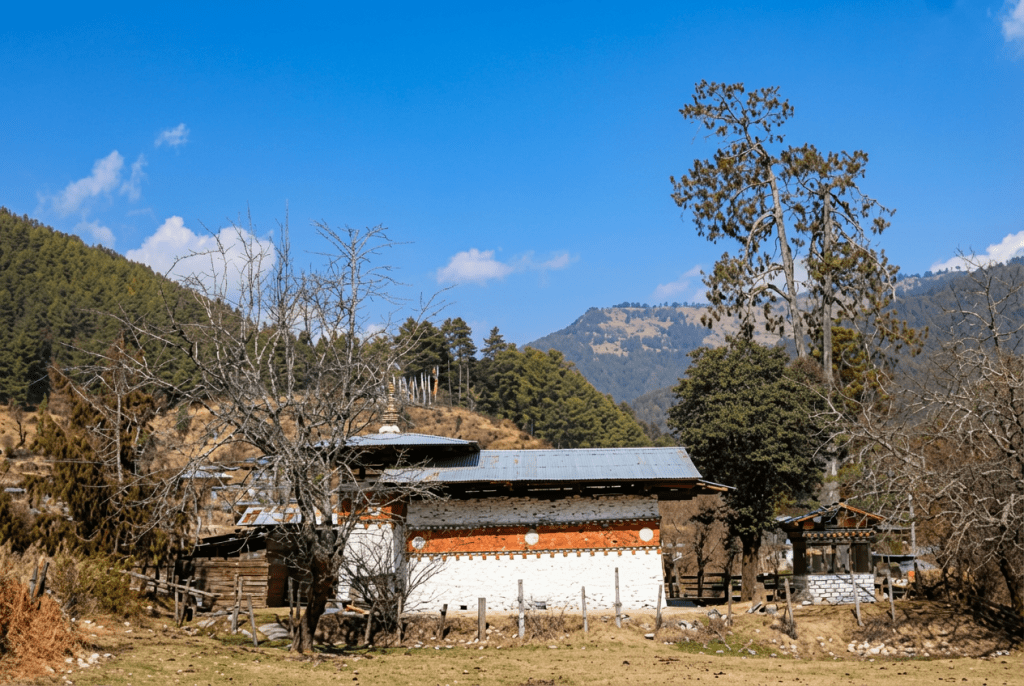
Located on a prominent ridge in the village of Nobgang (between Kurje and Jampa Lhakhang), Pema Lhakhang was strategically constructed to subdue a landscape formation said to resemble a three-headed scorpion. According to Pema Lingpa’s treasure text, Lungten Kunsal Melong (The Clear Mirror of Prophecies), the temple is one of the region’s earliest Buddhist establishments, dating back to the time of Guru Rinpoche.
Chronology of Restoration
The temple has undergone several significant renovations across the centuries:
11th Century: Lama Ngogten Choeku Dorji is said to have reconstructed the Lhakhang after finding it in a state of decay. According to caretaker, the murals are said be painted with the nosebleed by Lam.
14th Century: Terton Drimed Lhunpo (a contemporary of Sangay Lingpa and the 4th Karmapa, Rolpie Dorji) restored the temple. According to Dasho Phuntsho Wangdi’s Religious and Political History of Bhutan, the site was originally known as the Dolmai Lhakhang (Tara Temple) but came to be known as Pema Lhakhang following the restoration by Drimed Lhunpo.
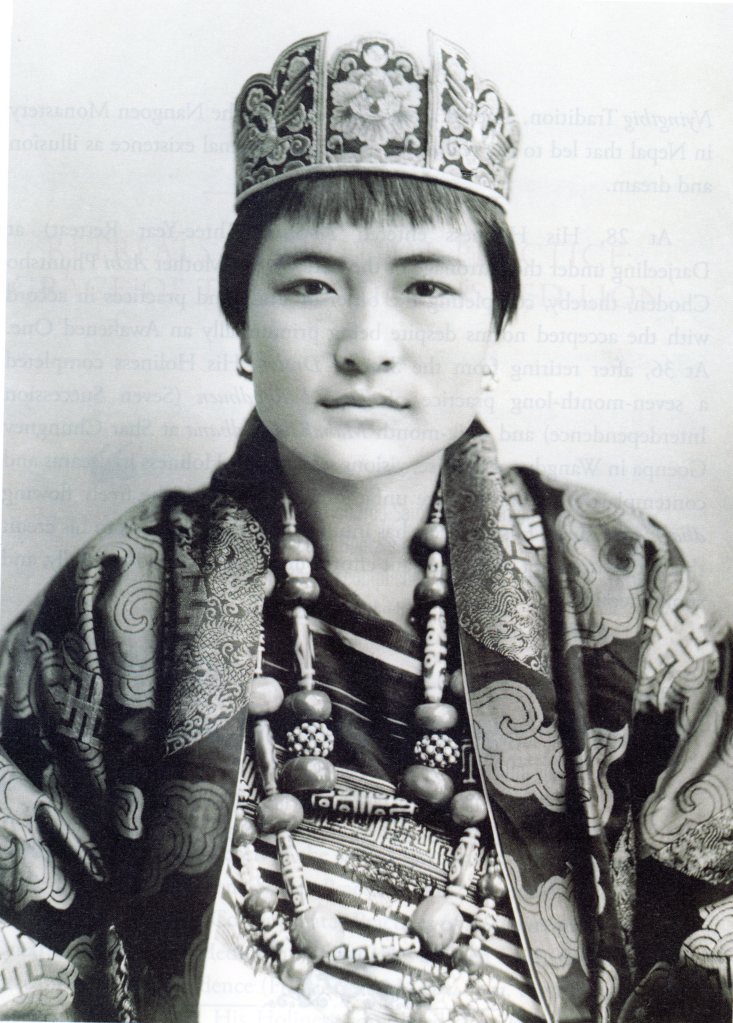
20th Century: Most recent recorded restoration happened in 1930s, during the renovations of Kurje Lhakhang by Gyalyum Phuntsho Choden, timber was granted to Gomchen Sonam Tenzin of Koleg Goenpa to repair the temple’s woodwork while preserving the original stone walls.
Literary and Prophetic Evidence
The existence of Pema Lhakhang is further supported by the poetry of Longchenpa, where he described;
“In the West, there are two temples: one of Maitreya and one of Tara,
Built in the likeness of the Ushang Do temple in Lhasa.
Nearby, upon the cliffs of the northern mountain,
Resides the self-arisen body-print of Pema Gyalpo.”
The Tara Temple mentioned by Longchenpa is identified as the present-day Pema Lhakhang. Though the structure remains modest in size—primarily housing its central statues and sacred murals—the stylistic evolution of the paintings suggests the temple was extended later, likely during the time of the Queen Mother, Gyalyum Phuntsho Choden.
References:
1. The Great Queen Mother of Bhutan:The Beautiful Ornament that Illuminates the Lives and Deeds of Her Majesty Queen Mother Ashi Phuntsho Choden Wangchuck by Lopen Yonten Phuntsho
2. Religious and Political History of Bhutan by Dasho Phuntsho Wangdi
3. The Hundred Tertons by Jamgon Kongtrul Lodro Thaye
 Kingdom Chronicles
Leave a comment